 how-to
How Long Does a Polygraph Test Take? Timeline & Phases
Table of Contents
- How Long Does a Polygraph Test Take? A Phase-by-Phase Timeline
- What Happens During a Polygraph Examination: Step by Step
- The Polygraph Pre-Test Interview: Preparation and Question Review
- How Many Questions Are Asked on a Polygraph Test?
- Chart Collection and Test Rounds: The Core Testing Phase
- Why Exam Duration Varies by Test Type and Purpose
- How Long Does It Take to Get Polygraph Results?
- Scheduling Your Polygraph Test: Appointment Wait and Practical Timing
- Frequently Asked Questions
Last Updated: October 12, 2026
How Long Does a Polygraph Test Take? A Phase-by-Phase Timeline
A polygraph test usually takes about 90 minutes to two hours from the moment you sit down with the examiner.
The confusion starts with the word "test." People picture one continuous event, but a polygraph examination is a sequence of phases, and only one involves the equipment.
Below, we break down each phase, the sensors used, and why some exams stretch past three hours.
The Full Appointment vs. the Testing Phase
The full appointment is longer than the testing phase. That distinction matters if you are scheduling around work or childcare.
Here is the split:
- Testing phase: 20 to 90 minutes of actual recording
- Pre-test interview: 30 to 60 minutes of questions and review
- Post-test review: 10 to 30 minutes of discussion
What Happens During a Polygraph Examination: Step by Step
A polygraph examination is a structured, multi-phase process that moves from conversation to recording to review. Skipping a step weakens the results.
Here is the standard sequence we follow:
- Intake and consent. The examiner confirms your identity, explains the process, and gets your written consent.
- Pre-test interview. You discuss the issue and the examiner learns the facts.
- Question review. Every question is read to you and approved before testing starts.
- Sensor attachment. The equipment is fitted and calibrated.
- Chart collection. The actual recorded testing begins.
- Post-test review. The examiner reviews the charts and discusses findings.
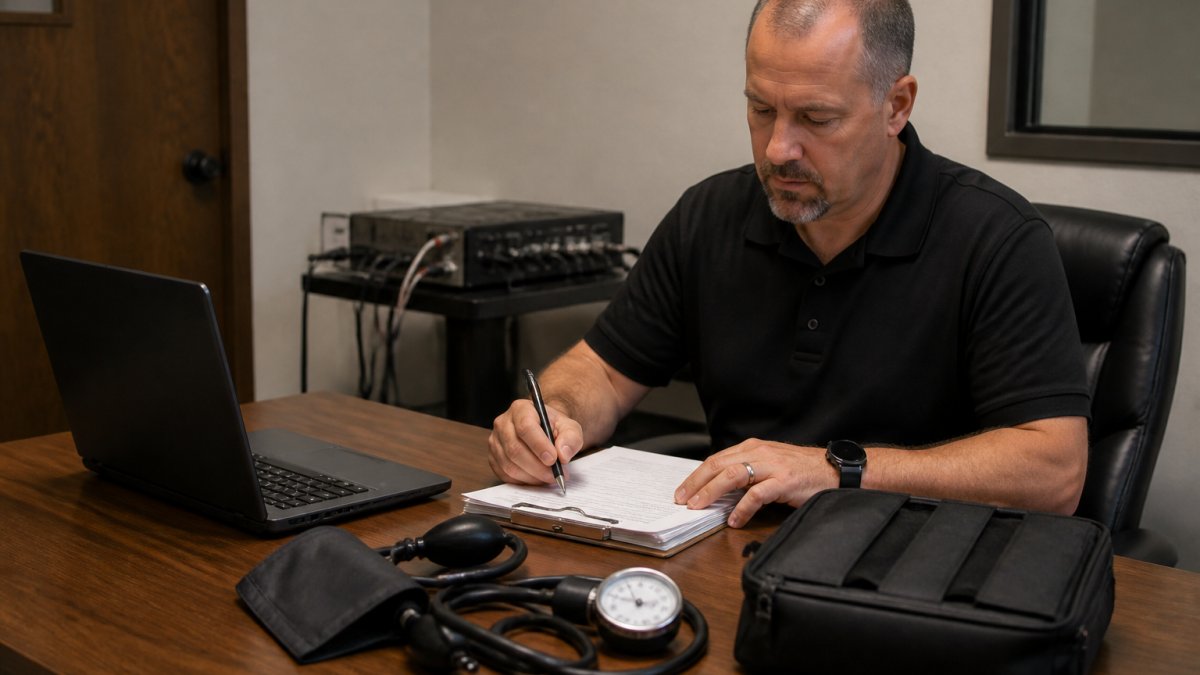
The American Polygraph Association standards for examination procedures set the framework most examiners follow, including the sequence above.
Sensors and Equipment Used During the Exam
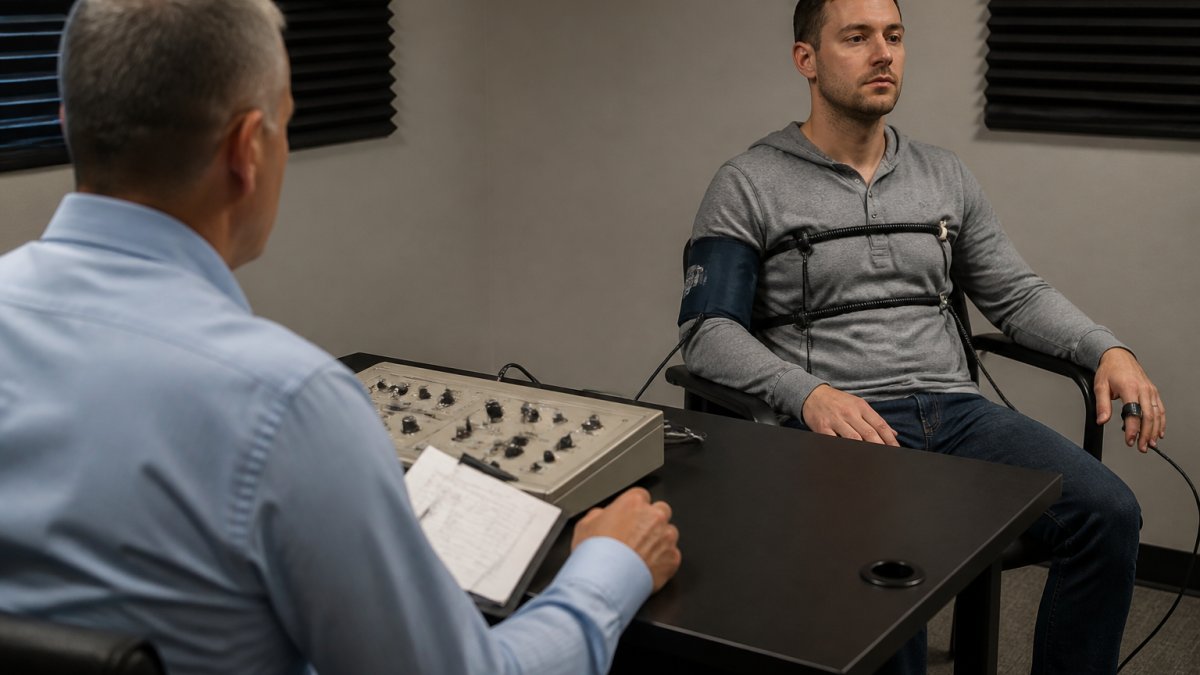
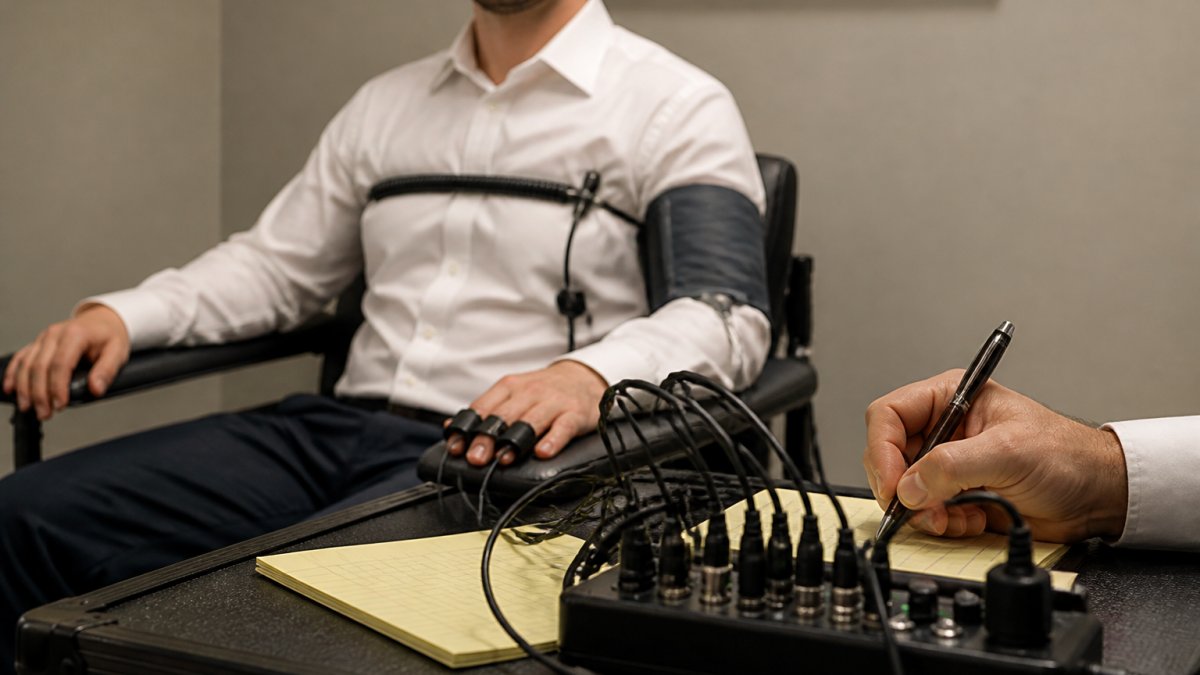
Four to five sensors are attached during a standard polygraph examination, each recording a different physiological response.
- Blood pressure cuff: measures cardiovascular activity
- Pneumograph tubes: record breathing rate and depth
- Finger plates: track skin conductivity, also called sweat gland activity
The examiner attaches these to your arm, chest, and fingertips. Setup takes about five to ten minutes. Once fitted, you sit still and breathe normally. The equipment records how your body responds to each question. It does not read your mind; it measures stress signals, which the examiner interprets against your baseline.
The Polygraph Pre-Test Interview: Preparation and Question Review
The polygraph pre-test interview is the longest single phase, often running 30 to 60 minutes, and the one most people underestimate.
During this time, the examiner:
- Explains how the equipment works
- Discusses the issue in detail
- Reviews your medical and background history
You approve every question before testing starts. This review is not a formality: a vague question produces a muddy chart, so examiners spend real time here.
A common mistake is treating the pre-test interview as small talk. What you say here shapes the questions asked during testing.
How Many Questions Are Asked on a Polygraph Test?
A standard polygraph test asks about 10 to 12 questions, and only 3 to 4 are relevant to the issue. The rest create a baseline:
- Relevant questions: directly about the issue at hand
- Comparison questions: about general honesty or past behavior
- Control questions: establish your normal response pattern
The examiner repeats the set several times, so while you may only hear 10 questions, you answer them across multiple rounds, letting the examiner compare responses.
Chart Collection and Test Rounds: The Core Testing Phase
Chart collection is the recorded portion, typically running 20 to 90 minutes. This is the part people mean when they ask how long a polygraph test takes.
Each round takes about five to ten minutes. With breaks, three to four rounds land you in that 20 to 90 minute window.
The National Institute of Justice overview of polygraph validity research notes that polygraph results carry real limits, and multiple charts help reduce noise but do not eliminate uncertainty.
Why Exam Duration Varies by Test Type and Purpose
Duration varies because a screening examination and a specific-issue examination are not the same job. A specific-issue test focuses on one event. A screening test covers several topics. The difference shows up in every phase, not just the recorded portion.
Here is how the main exam types compare:
| Exam Type | Typical Duration | Focus | Question Load |
|---|---|---|---|
| Specific-issue | 90 minutes to 2 hours | One event or claim | 3 to 4 relevant questions |
| Screening | 2 to 3 hours | Multiple topics | Broader question set |
| Multiple-issue | 2 to 3 hours | Several separate concerns | Extended review phase |
Those ranges are estimates, not guarantees. Two examiners can run the same exam type and finish 30 minutes apart.
What Actually Drives the Difference
Three variables explain most of the spread:
- Scope of the issue. A single-event exam gives the examiner one timeline to map. A screening exam covers employment history, criminal background, drug use, and financial conduct, so the pre-test interview alone can run an extra 20 to 30 minutes.
- Number of relevant questions. A specific-issue exam typically uses 3 to 4 relevant questions. A multi-issue exam may use 5 to 8, each reviewed, approved, and tested across multiple charts.
- Documentation needs. If the exam is tied to a legal matter, custody dispute, or employment decision, the examiner may add time for a detailed post-test review and a written report that holds up to scrutiny.
How Each Phase Stretches
The recorded testing phase does not grow much between exam types; most added time lands in the pre-test interview and post-test review.
- Specific-issue exam: pre-test interview 20 to 40 minutes, testing 20 to 40 minutes, post-test review 10 to 20 minutes.
- Screening exam: pre-test interview 45 to 75 minutes, testing 30 to 60 minutes, post-test review 15 to 30 minutes.
- Multi-issue exam: pre-test interview 45 to 90 minutes, testing 40 to 75 minutes, post-test review 20 to 30 minutes.
That is why two people can book the same appointment length and leave at different times. The chair time is similar; the conversation around it is not.
Purpose Matters as Much as Type
A pre-employment screening, a fidelity exam, and a criminal defense examination all fall under "polygraph," but they are paced differently. A defense attorney may request a longer pre-test interview to establish a clean record of what was asked; an employer screening may run a tighter, standardized question set to keep results comparable across candidates.
If your situation involves a legal deadline, tell the examiner up front. That single detail can change how the appointment is structured and how much time you should reserve.
How Long Does It Take to Get Polygraph Results?
Preliminary results are usually explained the same day, often within 10 to 30 minutes after testing ends. A written report typically follows within seven to ten days. The gap is normal: the examiner needs time to score the charts, review the recordings, and prepare documentation that holds up legally.
Expect these timelines:
- Verbal summary: same day, right after the exam
- Written report: about a week to ten days
- Court-ready documentation: may take longer, depending on the case
If you need results fast, say so when you book. Timing affects scheduling, not the test itself.
Scheduling Your Polygraph Test: Appointment Wait and Practical Timing
Most articles answer "how long does a polygraph test take" with a single number describing the exam itself. That does not tell you how long the whole process takes from the day you call to the day you have a written report in hand, three separate timelines that people often mix up.
Three Timelines, Not One
- Appointment wait: the time between booking and sitting down with the examiner. This ranges from same-week at a busy private practice to several weeks if you need a specific examiner, a specific date, or a court deadline.
- Exam duration: the time you are in the office, from intake to post-test review. Typically two to three hours.
- Result turnaround: the time from the end of the exam to a verbal summary (usually same day) and a written report (often seven to ten days).
Plan against all three. A two-hour exam with a three-week wait and a ten-day report window is a five-week process, not a two-hour one.
How Much Time to Reserve
Block three hours in your calendar, not two:
- Check-in and consent paperwork: 10 to 15 minutes
- Pre-test interview and question review: 30 to 60 minutes
- Sensor setup and calibration: 5 to 10 minutes
That adds up to roughly two to three hours in the office. Add travel and parking time if the location is unfamiliar, and do not schedule anything important immediately after.
Breaks and What to Expect During the Appointment
Short breaks between chart rounds are standard. Most examiners offer water and a chance to stretch. You are not locked in the chair for the full testing phase without pause.
What you should not expect: long lunch breaks, phone access during testing, or the ability to leave the building between rounds. Plan to stay on site for the full appointment window.
What to Confirm Before You Attend
A short call with the examiner's office can save a wasted trip. Confirm these items:
- Total time commitment. Ask for the full appointment window, not just the testing time.
- What to bring. Photo ID is common. Some examiners ask for a list of medications or a brief written statement of the issue.
- Payment and cancellation policy. Ask how and when payment is due, and what happens if you need to reschedule.
Practical Scheduling Guidance
- Call early if you have a court, custody, or employment deadline. Backlogs vary by examiner and region.
- Ask about the examiner's current wait time before you commit to a date.
- Avoid scheduling right after a night shift, a long flight, or a stressful event. Fatigue and stress can extend the pre-test interview.
At API Polygraph, scheduling starts with one phone call. We discuss your situation, confirm which examination fits, and set a time. Most examinations are completed in a single confidential session, with results explained clearly afterward and a written report available when you need it.
One more thing worth knowing: polygraph testing is not perfect. No examiner should promise you a specific result. Every examination we run is voluntary, and what you share stays private. If testing is not the right fit for your situation, we will tell you that too.
Frequently Asked Questions
How long does a polygraph test usually take?
Most polygraph examinations take between 90 minutes and 3 hours from start to finish. That total includes the pre-test interview, question review, the testing phase, and a brief post-test discussion. The actual time connected to the sensors, known as chart collection, typically runs 20 to 90 minutes depending on how many test rounds are needed and how many issues are being examined.
Can a polygraph test take longer than expected?
Yes. Several factors can extend an exam, including multiple issues being tested, the need for additional chart collection rounds, fatigue or anxiety that disrupts recorded responses, and language or accessibility needs. A specific-issue examination may finish in about 90 minutes, while a multi-issue screening examination can run 2 to 3 hours or more. Your examiner should explain the expected timeline before you begin.
How long does the pre-test interview take?
The pre-test interview usually takes 30 to 60 minutes. During this phase, the examiner reviews the relevant questions, comparison questions, and control questions with you, confirms your understanding, and addresses any concerns. This step matters because it ensures you know exactly what will be asked before the sensors are connected, and it gives the examiner a baseline for interpreting your physiological responses.
How long does it take to get polygraph test results?
Results are often explained to you immediately after the examination, once the examiner has reviewed the polygraph charts. A formal written report typically takes a few days to several weeks to prepare, depending on the complexity of the case and whether the findings need to be documented for legal or professional purposes. If you need results for a court matter or custody dispute, ask about the report timeline when you schedule.