 ultimate-guide
Polygraph Test Cost and Process: What to Expect in 2026
Table of Contents
- Polygraph Test Cost in 2026: What Actually Drives the Price
- Factors Affecting Polygraph Exam Pricing
- What to Expect During a Polygraph Examination
- How Long Does a Polygraph Test Take?
- How to Compare Quotes and Verify a Qualified Examiner
- Results, Admissibility, and What Happens After an Inconclusive Outcome
- Conclusion: Booking a Polygraph Test With Confidence
- Frequently Asked Questions
Last Updated: October 9, 2026
Polygraph Test Cost in 2026: What Actually Drives the Price
Most people searching for polygraph test cost information want a simple number. There isn't one. A polygraph examination is a professional service priced around examiner time, travel, case complexity, and documentation needs, which is why quotes vary so widely from one provider to the next.
This guide from API Polygraph breaks down what shapes the price of a polygraph test, what happens during the examination itself, and how to tell a qualified examiner from someone who simply owns the equipment.
Understanding the polygraph test cost and process before you book protects you from two expensive mistakes: paying for an examination that won't hold up if you need it for a legal matter, and choosing an examiner whose methods fall short of professional standards.
Examiner Fee vs. Total Cost: What You're Really Paying For
The examiner's fee is the core of the price, but it's not the whole bill. Total cost typically includes the examination itself, any pre-test consultation time, the written report, and travel if the examiner comes to you. Some providers bundle everything into one flat rate; others itemize. Ask which model applies before you commit.
| Cost Component | What It Covers | Usually Included? |
|---|---|---|
| Examiner fee | Pre-test interview, examination, analysis | Yes |
| Written report | Documentation of findings | Sometimes |
| Travel fee | Examiner coming to your location | Rarely |
| Rush scheduling | Short-notice appointment | Rarely |
| Follow-up consultation | Reviewing results with you | Sometimes |
A single confidential session is standard for most examinations. What varies is how much of the surrounding work, consultation, reporting, and scheduling flexibility, is folded into the quoted price.
Factors Affecting Polygraph Exam Pricing
Several variables move the price up or down, and understanding them helps you compare quotes fairly.
- Test type and purpose. A focused single-issue examination differs from a multi-issue or full-disclosure examination, and the time required differs with it.
- Case complexity. More background to review and more questions to structure mean more examiner hours.
- Location and travel. An examiner traveling to your city or a private residence adds cost that an office appointment avoids.
- Turnaround time. Rush appointments ask the examiner to reshuffle their schedule.
- Documentation needs. A formal written report prepared for an attorney or a court matter takes more work than a verbal debrief.
Pricing also varies by market. Rates in a major metro area rarely match rates in a smaller city, and availability of qualified examiners in your area matters as much as price.
What to Expect During a Polygraph Examination
A polygraph examination is a structured, multi-stage process conducted by a trained examiner, not a single machine reading. The clearest way to understand it is to follow the whole arc, from the first phone call to the final result, because most of the value (and most of the cost) sits in the stages before and after the recording itself.
Step 1: Booking and Pre-Test Consultation
It starts with a confidential conversation. The examiner asks what issue you want examined, whether the matter is private or tied to a legal proceeding, and whether you need a written report. This is where scope is set: a focused single-issue examination is a different job from a multi-issue or full-disclosure examination. Expect to confirm the fee, the deposit or payment arrangement, and the appointment window here.
Step 2: Preparation Before the Appointment
Preparation is mostly about giving the examiner clean physiological data. A common pattern is to arrive well-rested, avoid heavy caffeine or alcohol in the hours before, and disclose any medication that could affect heart rate, blood pressure, or skin response. Bring any documents or background the examiner asked for. If you have a health condition that could interfere with the recording, a heart condition, for example, raise it during booking, not on the day.
Step 3: Consent and Pre-Test Interview
The examiner explains the process, confirms the examination is voluntary, and obtains your informed consent. Then comes the pre-test interview: you discuss the issue at hand so the examiner can build accurate, fair questions. This stage is where the examiner learns enough context to avoid ambiguous or misleading wording.
Step 4: Question Review
The examiner walks you through every question before any recording begins. No surprises. Control questions, relevant questions, and neutral questions are arranged deliberately, and that structure is what lets an examiner interpret physiological responses with any reliability at all. You will know exactly what will be asked.
Step 5: Sensor Attachment and Setup
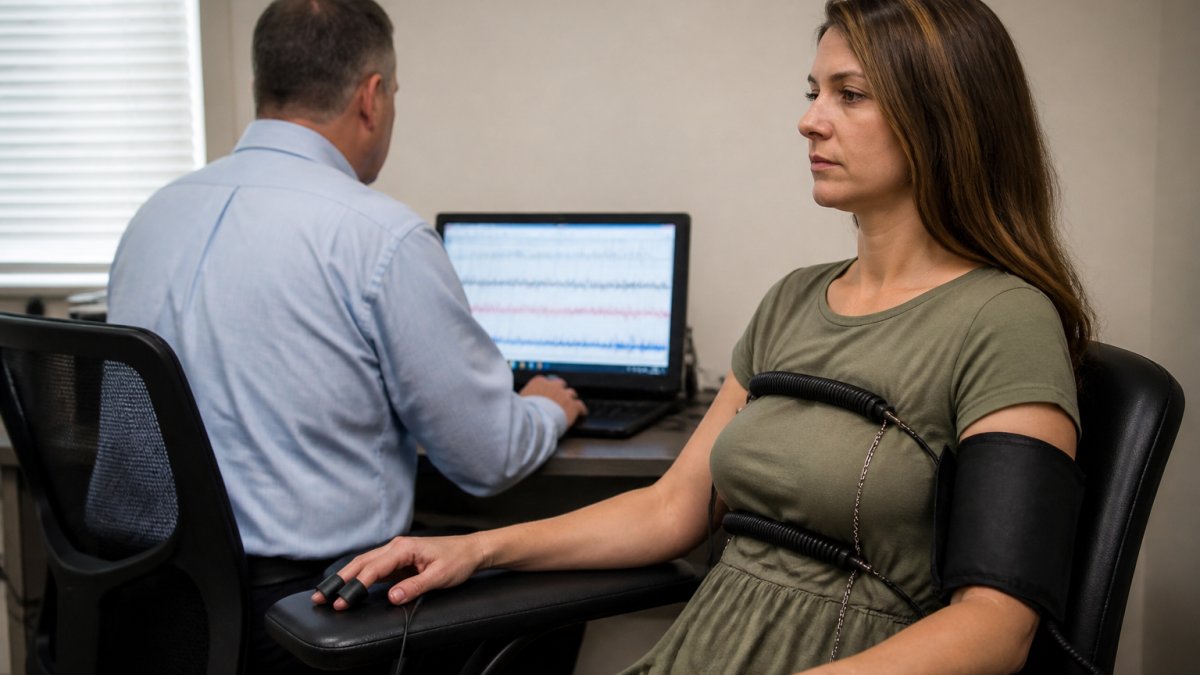
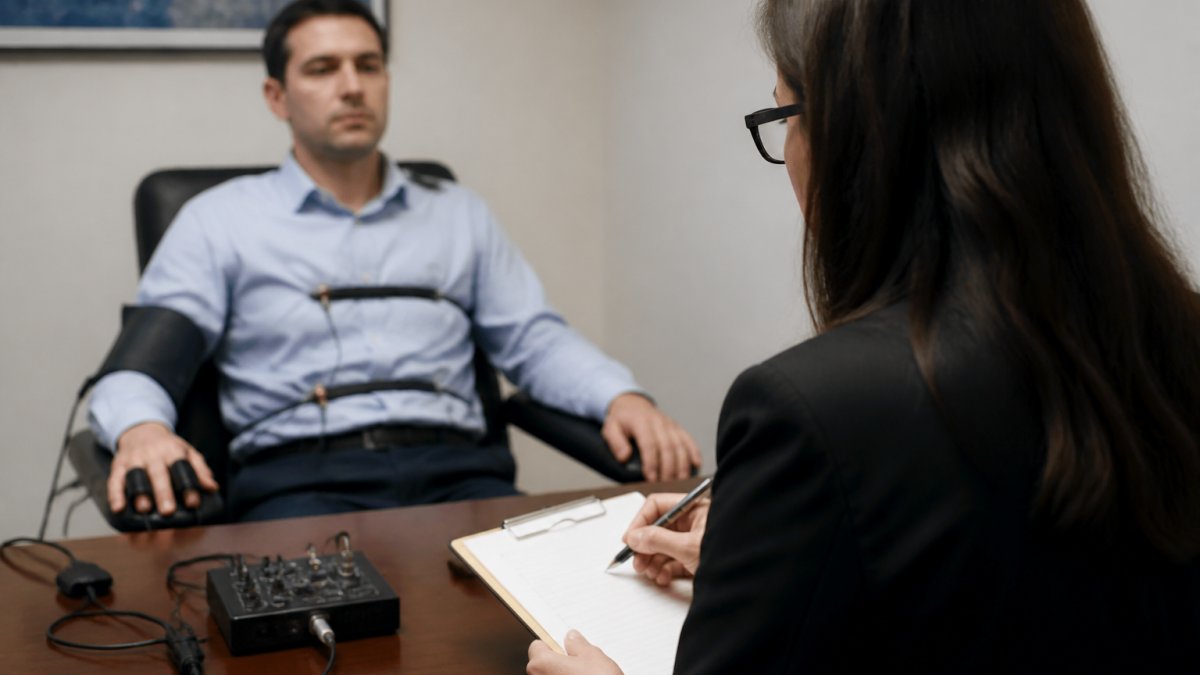
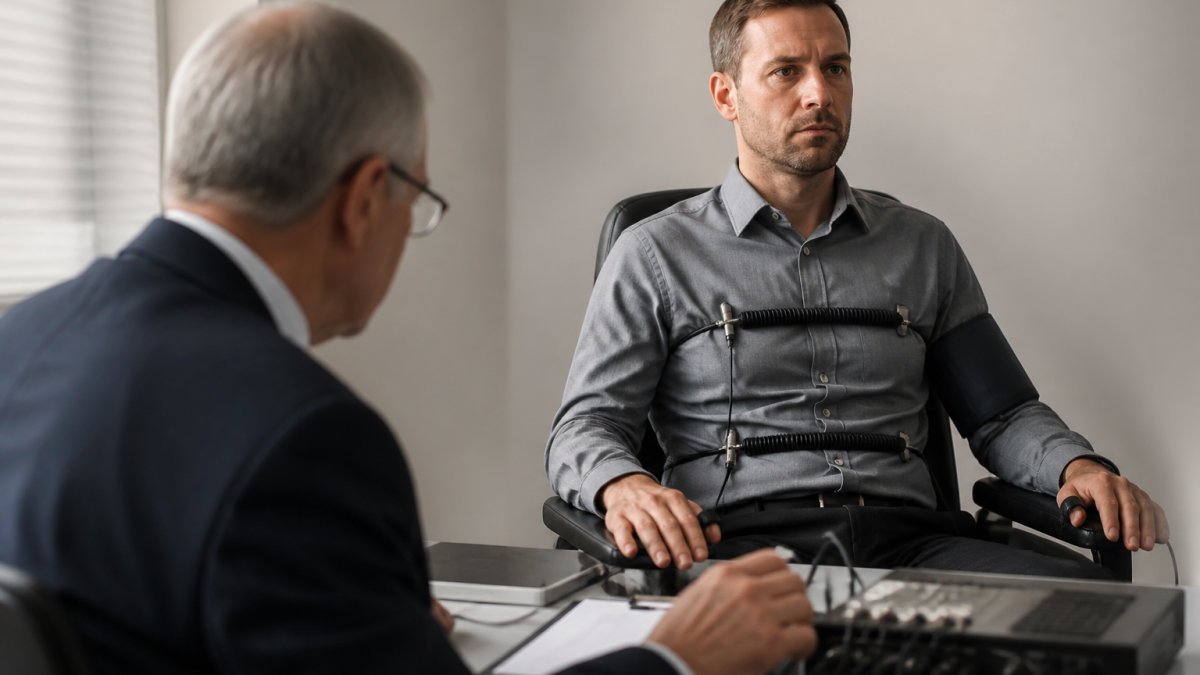
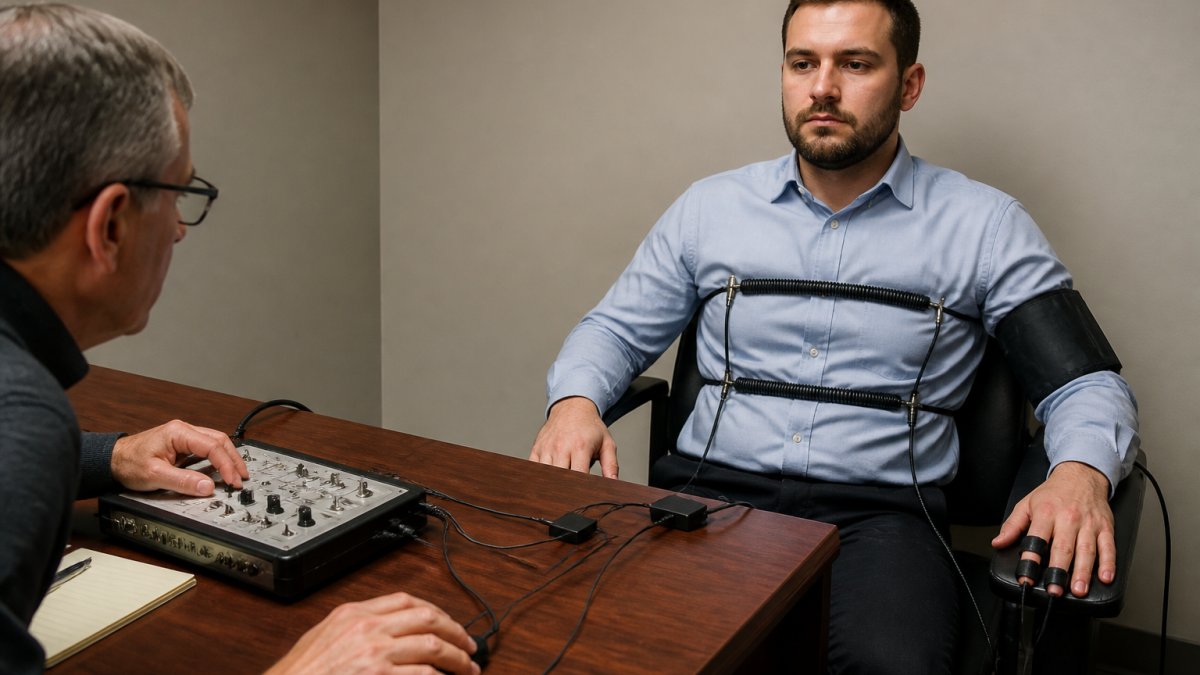
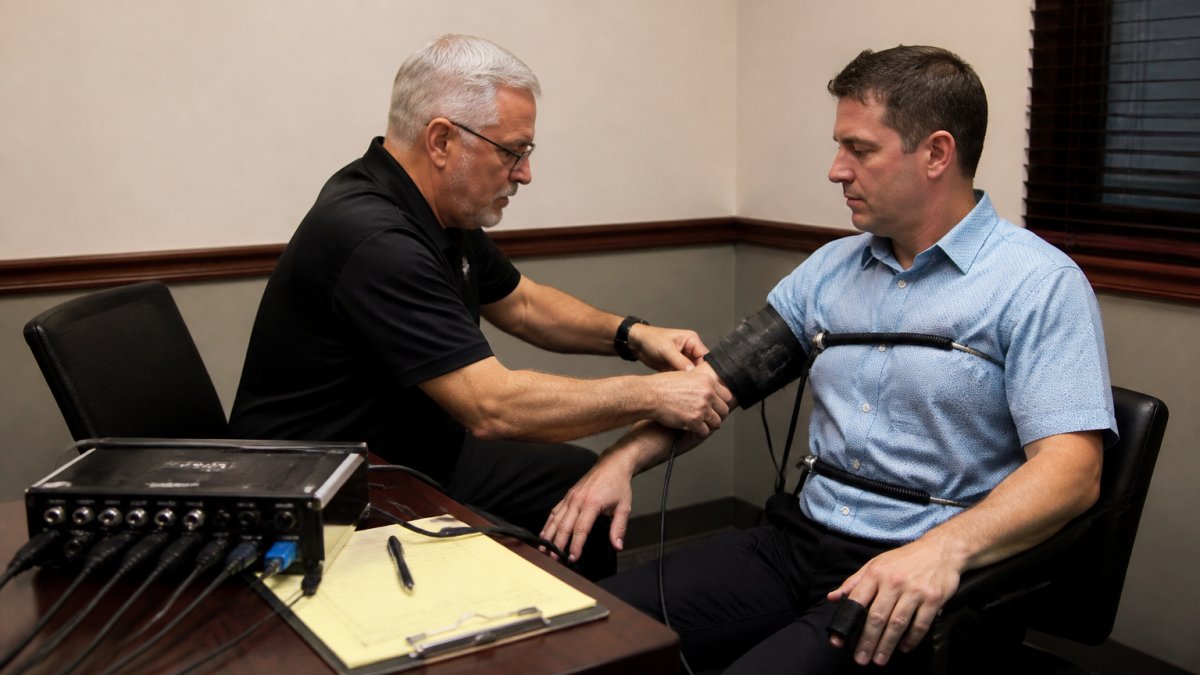
Components record breathing, heart rate, blood pressure, and skin response. Sensors are attached to the chest and abdomen, the arm, and the fingertips. Setup takes a few minutes, and the examiner will run a brief check to confirm the instrument is reading cleanly before the test begins.
Step 6: The In-Test Phase
Questions are asked in a controlled sequence while physiological responses are recorded. The examiner may run the question set more than once to compare responses. The recording phase itself is often the shortest part of the appointment.
Step 7: Analysis and Post-Test Review
The examiner analyzes the charts and explains the findings. Results fall into three categories: passing, failing, or inconclusive. An inconclusive result means the examiner could not reach a confident determination, not that you failed, and it can happen for reasons as ordinary as poor sleep, medication, or an unresolved question. If you requested a written report, this is when its scope and delivery timeline are confirmed.
How Long Does a Polygraph Test Take?
A polygraph examination usually takes between one and three hours from start to finish. The recording phase itself is often the shortest part. Most of the time goes into the pre-test interview, question review, and post-test analysis.
A straightforward single-issue examination sits at the shorter end. A complex case with extensive background, multiple issues, or a formal report runs longer. Travel and setup add time on top when the examiner comes to you.
Plan for a half-day window rather than a quick appointment. Rushing the pre-test phase is one of the most common ways a test gets compromised before it even starts.
How to Compare Quotes and Verify a Qualified Examiner
Price comparison only means something once you've confirmed you're comparing qualified examiners. Start with credentials, then compare cost.
Ask every provider the same questions:
- Are you a licensed or certified polygraph examiner, and through which body?
- How many examinations have you conducted, and over how many years?
- Do you follow American Polygraph Association standards?
- What exactly does your quoted price include, and what costs extra?
- Will I receive a written report, and is it included in the fee?
- How do you handle an inconclusive result?
- What is your confidentiality policy?
A qualified examiner answers these without hesitation. Evasiveness on credentials or included services is your signal to walk away. The American Polygraph Association publishes standards and ethics guidance that examiners should be able to speak to directly.
At API Polygraph, our examiners are certified and bring real investigative experience from five generations in law enforcement at the city, state, and federal levels. Across 30 years we've conducted more than 10,000 polygraph examinations following American Polygraph Association standards, and every examination begins with a confidential consultation.
Results, Admissibility, and What Happens After an Inconclusive Outcome
Polygraph results fall into three categories: passing, failing, or inconclusive. An inconclusive result means the examiner could not reach a confident determination, not that you failed. It can happen for reasons as ordinary as poor sleep, medication, or an unresolved question.
On admissibility: polygraph evidence is generally not admissible in most U.S. court proceedings without the consent of both parties, though rules vary by jurisdiction and by the type of proceeding. Many states also restrict private employers' use of polygraph testing. The Employee Polygraph Protection Act governs most private-sector employment testing, and state rules can add further limits. If your situation involves custody, criminal defense, or another legal matter, talk to your attorney about how results would actually be used before you schedule.
What happens after an inconclusive result depends on the examiner. A responsible provider will explain what caused the uncertainty and whether a retest makes sense. A retest is a fresh examination, not a re-reading of the old charts, and it carries its own fee.
Conclusion: Booking a Polygraph Test With Confidence
The hardest part of booking a polygraph examination isn't the price. It's knowing whether the examiner across the table is qualified, whether the process is sound, and whether the results will actually mean something when you need them. Those questions decide the value of what you're paying for.
API Polygraph handles all three. We offer confidential, consent-based examinations with certified examiners, a clear written report when you need documentation, and court-qualified expert testimony when a legal matter requires it. Every examination is voluntary, everything you share stays private, and you stay in control of what happens next.
Call 800-662-1571 or email truth@apipolygraph.com to discuss your situation privately. One phone call confirms whether testing fits your case and what the next step would look like.
Frequently Asked Questions
How much does a polygraph usually cost?
Pricing for a polygraph test depends on the examiner, your location, the type of test, and how complex the case is. A standard single-issue exam typically sits in a moderate range, while multi-issue, couples, or legal-purpose exams cost more because they take longer and often include a written report. Travel, rush appointments, and retests can add fees. Because rates vary by examiner and region, request an itemized quote so you can see the examiner fee, report fee, and any travel charges separately before you book.
How long does a polygraph test take from start to finish?
Most single-issue polygraph examinations take about 90 minutes to two hours on site. That includes the pre-test interview, question review, sensor setup, the in-test phase with several chart passes, and a post-test discussion of the results. Complex cases, multiple issues, or legal exams with documentation can run longer. If you need answers quickly, ask about rush appointments when you book, since scheduling availability often affects how soon you can be tested more than the exam itself does.
Can a truthful person fail a polygraph test?
Yes. A polygraph records physiological responses, not lies, and factors like anxiety, medication, fatigue, or an overly nervous personality can produce misleading readings. A qualified examiner follows American Polygraph Association standards, uses control questions to establish your baseline, and reviews the charts carefully before giving an opinion. That is why a single inconclusive or failed result should not be treated as proof on its own, and why a second opinion or retest with a different examiner is often the sensible next step.
What affects the price of a polygraph examination the most?
The biggest cost drivers are the examiner's credentials and experience, the type and number of issues being tested, and your location. A court-qualified examiner who provides expert testimony and written reports charges more than someone offering a basic screening. Travel fees apply if the examiner comes to you, and rush scheduling or a retest adds to the total. Ask for a written breakdown of the exam fee, report fee, and any travel or after-hours charges so there are no surprises.