 ultimate-guide
Private Polygraph Test for Infidelity: A Complete Guide
Table of Contents
- What Is a Private Polygraph Test for Infidelity?
- How a Polygraph Examination Works
- How to Prepare for a Lie Detector Test
- Polygraph Accuracy for Personal Matters
- Infidelity Polygraph Cost and What to Expect
- Finding a Qualified and Accredited Examiner
- Privacy, Confidentiality, and Legal Admissibility
- After the Test: Understanding Results and Next Steps
- Frequently Asked Questions
Last Updated: October 2, 2026
What Is a Private Polygraph Test for Infidelity?
A private polygraph test for infidelity is a voluntary examination measuring physiological responses to questions about suspected infidelity.
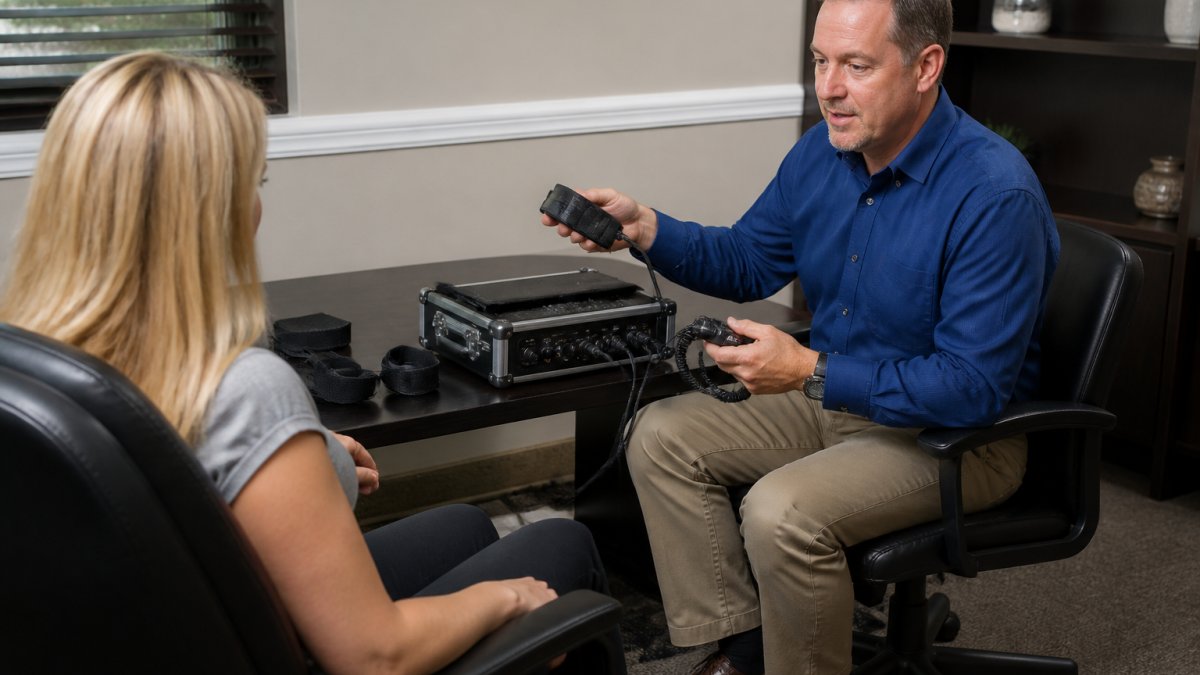
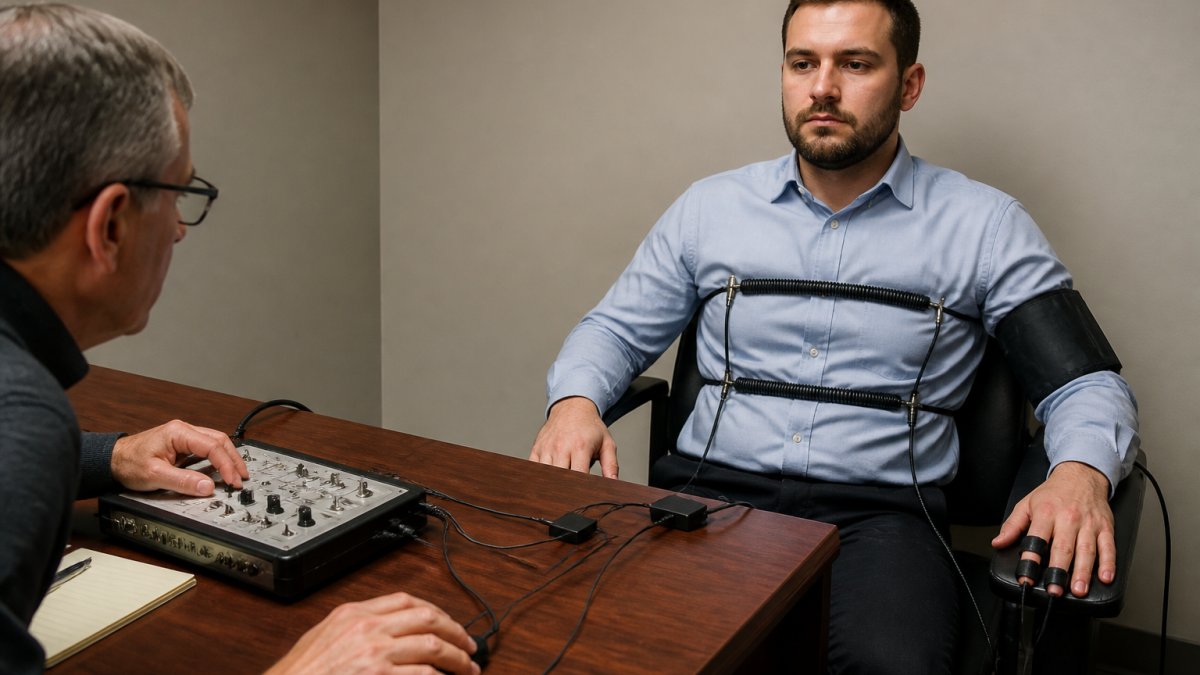
The examination measures three physiological indicators: cardiovascular activity, respiratory patterns, and skin conductance.
At API Polygraph, we've conducted thousands of examinations over three decades, helping individuals and couples navigate infidelity concerns with clarity and professional objectivity. Testing is entirely voluntary, results remain confidential, and you control what happens next.
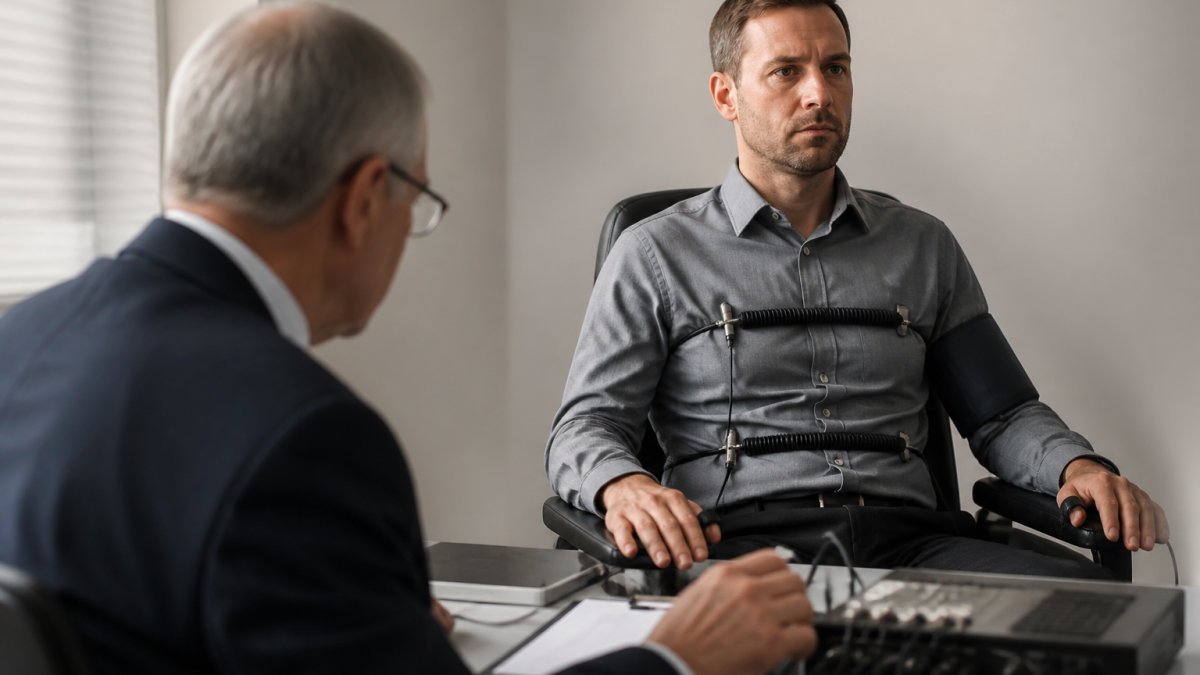
A pre-test consultation establishes your specific concerns. The examination takes place in a controlled environment where sensors measure physiological responses.
How a Polygraph Examination Works
A polygraph examination combines controlled questioning with real-time measurement of autonomic nervous system responses. Sensors track cardiovascular activity, respiratory patterns, and skin conductance, three measurable indicators of physiological stress.
The autonomic nervous system activates involuntarily during stress, anxiety, or deception. Heart rate increases, breathing becomes shallow or irregular, and skin conductance changes.
Physiological Responses Measured
Three primary physiological indicators form the foundation of polygraph analysis:
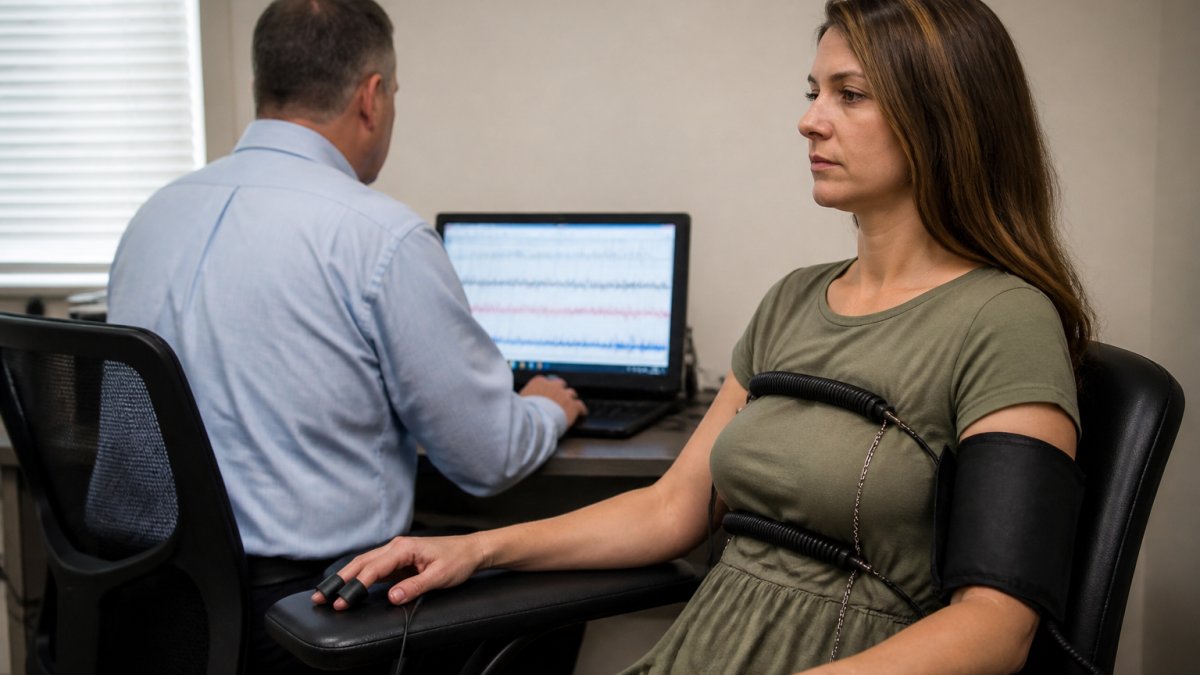
Cardiovascular activity measures heart rate and blood pressure through sensors on your chest and arm. Deceptive responses trigger increased heart rate and elevated blood pressure.
Respiratory patterns track breathing depth and frequency through bands around your chest and abdomen. Deception often causes shallow, irregular breathing or breath-holding.
Skin conductance measures electrical conductivity of the skin, which increases when sweat glands activate under stress.
The examiner monitors all three on a moving chart, creating a visual record of physiological responses.
The Role of the Examiner
The examiner is the critical human element. They design questions, interpret data, and reach conclusions about truthfulness.
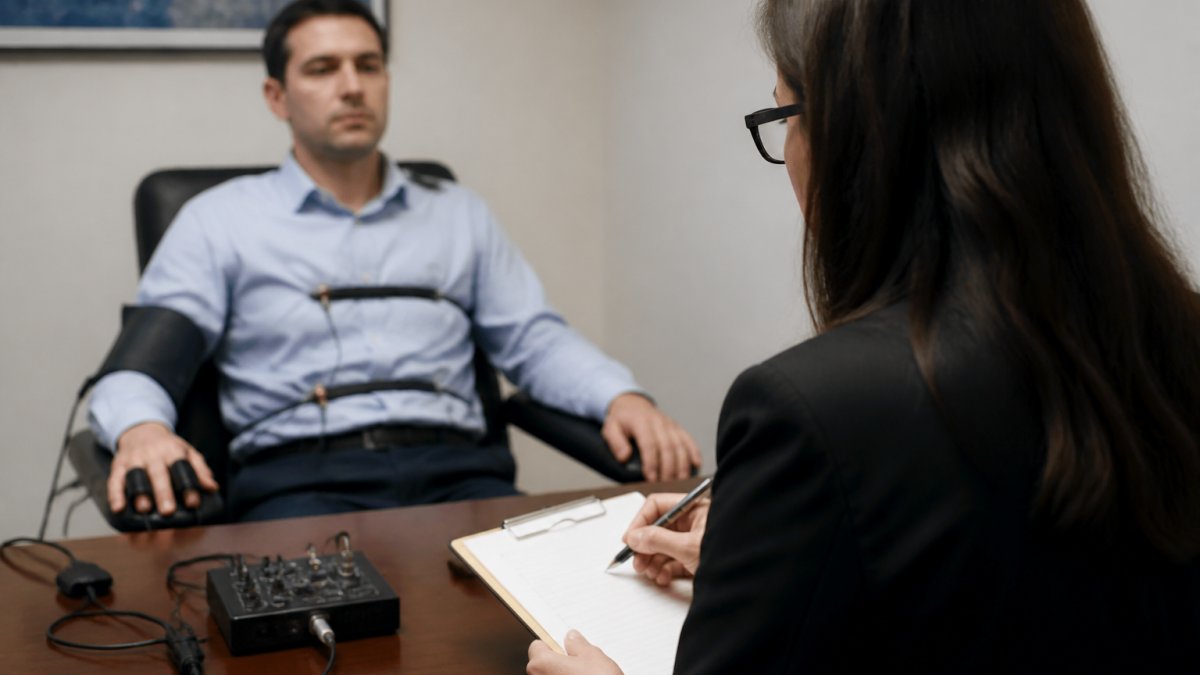
A qualified examiner conducts a pre-test interview to understand your concerns, refine questions, and establish baseline responses.
The examiner analyzes charts using standardized scoring methods and provides their professional opinion on truthfulness or deception.
How to Prepare for a Lie Detector Test
Preparation involves practical and emotional readiness. Get adequate sleep, eat normally, and avoid caffeine on examination day. Mental and emotional preparation often determines result quality.
Pre-Test Emotional Preparation
Your emotional state significantly affects physiological response accuracy. Test anxiety can elevate baseline stress, making it harder to distinguish nervousness from deception.
Clarify your goal: prove innocence, confirm suspicions, or establish facts for relationship decisions. Honesty about motivation reduces internal conflict.
Consider speaking with a therapist beforehand if carrying significant emotional weight.
What Happens During the Pre-Test Interview
The pre-test interview establishes the foundation for accuracy.
The examiner asks you to describe the situation, listening for details that become examination questions.
You'll review the actual questions beforehand. The examiner wants clarity, not surprise. You can suggest modifications if a question doesn't accurately reflect your situation.
The examiner asks about medical history, medications, and physical conditions that might affect responses.
Polygraph Accuracy for Personal Matters
Polygraph accuracy depends on examiner skill, question clarity, and the situation. Polygraphs are more accurate for detecting deception than confirming truthfulness.
For infidelity examinations, accuracy is higher with specific questions. Vague questions produce less reliable results than specific ones like "Have you had sexual contact with [specific person] since [specific date]?"
Understanding False Positives and False Negatives
A false positive occurs when the polygraph indicates deception when the person is truthful. This happens when stress, nervousness, or anxiety creates patterns resembling deceptive responses.
A false negative occurs when the polygraph indicates truthfulness when the person is deceptive.
False positives and negatives mean polygraph results are one data point, not absolute proof.
Limitations and What Polygraphs Cannot Do
Polygraphs cannot determine intent, motivation, or emotional significance.
Polygraphs work best for specific, concrete questions with clear true-or-false answers. They work poorly for questions requiring interpretation, like "Were you emotionally unfaithful?"
The test cannot account for individual differences in stress reactivity. Examiners use baseline questions to account for this, but variation still affects results.
Infidelity Polygraph Cost and What to Expect
Contact API Polygraph for a specific quote. Most examinations are completed in a single session, with results explained immediately and a written report available if needed.
Finding a Qualified and Accredited Examiner
Not all examiners are equally qualified. Certified professionals differ substantially from uncertified operators in result reliability, privacy protection, and legal admissibility.
Certification and Professional Standards
The American Polygraph Association (APA) sets professional standards for examiners. Certified examiners have completed formal training, passed rigorous examinations, and committed to ongoing development.
Ask about APA certification or equivalent credentials, this is the baseline for recognized professional standards. Many examiners have law enforcement or investigative backgrounds.
Look for examiners specializing in private examinations for personal matters.
Questions to Ask Before Booking
Before committing to an examiner, ask these specific questions:
Are you certified by the American Polygraph Association or equivalent professional body? This is non-negotiable. If the answer is no, keep looking.
How long have you been conducting private polygraph examinations for infidelity?
Can you explain your question-design process? A good examiner develops questions specific to your situation, not generic templates.
What is your approach to confidentiality? Ask who has access to results, how long records are kept, and what happens to your information.
What happens if results are ambiguous? Ask how they handle unclear charts and whether they offer re-examination if inconclusive.
Privacy, Confidentiality, and Legal Admissibility
Privacy and confidentiality are foundational. You need assurance that results won't be disclosed without your consent.
Confidentiality Agreements and Data Protection
A reputable examiner executes a confidentiality agreement. Results, questions, and personal information remain confidential.
Ask about data storage and retention. How long are records kept? Where are they stored? What security measures protect them?
You can authorize results shared with a therapist or attorney in writing, but the default should be complete confidentiality.
Court Admissibility and Legal Considerations
Polygraph results are generally not admissible in court in most jurisdictions. The examination is for your clarity and decision-making, not legal proceedings.
If both parties agree in writing to accept results as evidence, some courts allow stipulated admissibility. Consult an attorney before scheduling if considering legal action or custody disputes.
Federal courts generally exclude polygraph evidence except in rare circumstances. Consult an attorney before testing if you expect court admissibility.
After the Test: Understanding Results and Next Steps
The examination concludes with the examiner reviewing charts and reaching a conclusion. Clarity or ambiguity emerges depending on examination quality and situation.
How Results Are Presented
Immediately after, the examiner explains findings, walking you through charts and showing where stress responses appeared and how they were interpreted.
Results fall into three categories: truthful, deceptive, or inconclusive. Inconclusive results are common and don't mean the test failed, the physiological data simply didn't provide clear evidence.
A written report documents the examiner's findings, the questions asked, and their professional conclusion.
Post-Test Communication and Relationship Impact
How you use the results depends on your situation and your goals.
If your partner agreed to the examination, the results provide a concrete fact to discuss.
Communicating results to your partner requires care.
Many couples benefit from working with a therapist after a polygraph examination, regardless of the results.
Frequently Asked Questions
How accurate is a polygraph test for infidelity?
Polygraph tests for infidelity depend on the examiner's skill, the subject's psychological state, and test conditions. However, accuracy is not guaranteed. False positives and false negatives occur when physiological stress responses are misinterpreted or when a subject's baseline differs significantly from their response patterns. A qualified examiner trained in deception detection and autonomic nervous system assessment improves reliability. Results should be viewed as one piece of evidence, not definitive proof.
How much does a private infidelity polygraph test cost?
Infidelity polygraph cost varies based on the examiner's experience, your location, test complexity, and whether you need a written report or court-qualified expert testimony. Pricing depends on these factors and the specific services you require. Contact a certified examiner or professional service directly for a current quote tailored to your situation, as costs differ significantly by region and service level.
What should I do to prepare for a lie detector test?
Before your examination, get adequate sleep, eat normally, and avoid caffeine and stimulants on test day. Mentally prepare by being honest about what you'll be asked and understanding that physiological responses, not your honesty, are being measured. Discuss your concerns with the examiner during the pre-test interview. Avoid countermeasures or attempts to manipulate results, as examiners are trained to detect them. Arrive calm and focused; the examiner will establish a baseline of your normal responses before relevant questions begin.
Are polygraph results admissible in court?
Polygraph admissibility varies by state and court jurisdiction. Most courts do not admit polygraph results as evidence unless both parties agree in writing beforehand. Some states allow results only when stipulated by agreement, while others exclude them entirely due to reliability concerns. If your situation involves custody, divorce, or criminal defense, consult an attorney about your state's rules. A court-qualified examiner can provide expert testimony, but the test results themselves may not be admitted as evidence without legal agreement.
How do I know if an examiner is legitimate and qualified?
Verify that the examiner is certified by the American Polygraph Association or a recognized state board and has completed accredited training in polygraph examination and deception detection. Ask about their years of experience, professional certifications, and whether they follow established testing protocols. Request references or information about their background in law enforcement or investigative work. A legitimate examiner will openly discuss their qualifications, explain their methodology, and be transparent about the limitations of polygraph testing.
What happens if the results don't show what I expected?
If results are inconclusive or unexpected, discuss them directly with the examiner. They will explain the chart analysis, physiological responses measured, and their interpretation. You have the right to request a second opinion from another certified examiner, though this involves additional cost. Some situations warrant retesting if stress or medical factors affected the initial examination. Understand that polygraph results reflect physiological responses, not intentions, and results can be influenced by anxiety, medications, or other variables beyond truthfulness.
Will a polygraph test escalate conflict in my relationship?
A polygraph test can feel confrontational, but it can also provide objective clarity when trust is broken. Consider whether both partners consent to testing and understand its purpose. Some couples use results as a foundation for rebuilding trust through counseling; others find it clarifies whether the relationship can be repaired. Before scheduling, reflect on whether you're seeking truth for your own peace of mind or to prove a point. A professional examiner can discuss how to frame the test as a step toward resolution rather than accusation, and couples counseling alongside testing often helps manage the emotional impact.